What Is the Best Nail Care Routine? 7 Easy Steps
Introduction:
The best nail care routine comes down to seven steps done in the right order: soften your nails, trim them straight across, file gently in one direction, push back the cuticle without cutting it, moisturize right away, seal everything with a good base coat, and check your nails regularly for changes. That’s the direct answer, and if you remember nothing else from this article, remembers that. You already know the feeling of trying five different products and still ending up with nails that peel, split, or just look tired, and honestly, that frustration is fair, because most nail care advice online treats every nail the same way when it shouldn’t. I promise this guide is different. By the end, you’ll know your exact nail type, what’s actually causing your specific problem, and the routine built for that problem rather than a generic one copied from a product label. We’ll walk through nail types, the real causes behind weak nails, a full at-home routine, natural strengthening methods, and the ingredients worth avoiding, all in plain, simple language.
What Is Your Nail Type, and Why Does It Matter?
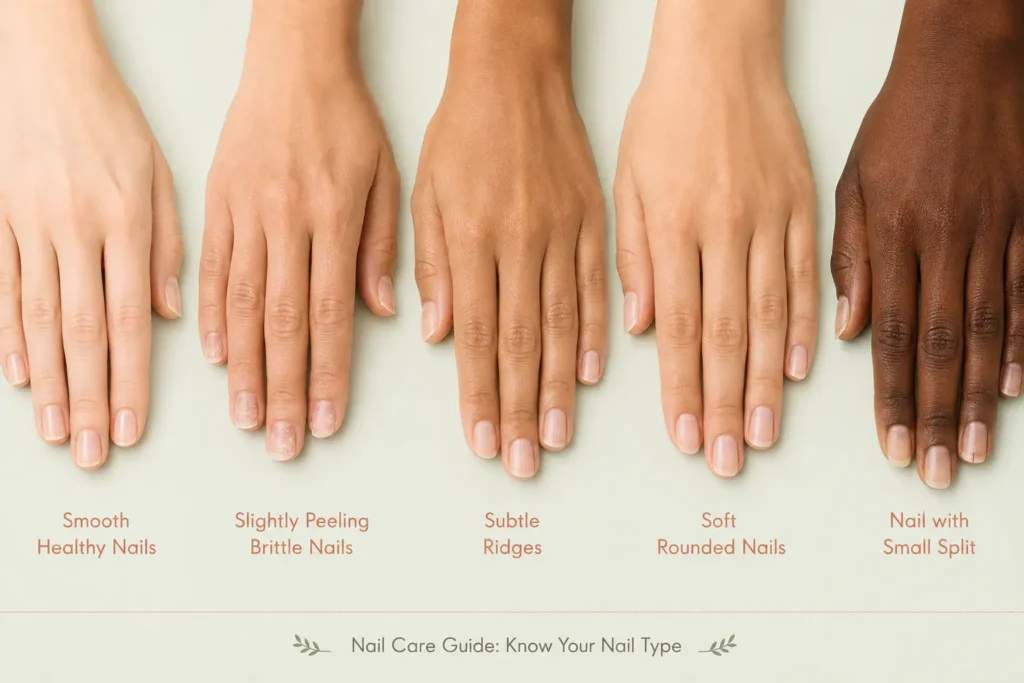
Your nail type is simply the current condition and behavior of your nail plate, whether it’s smooth and strong, ridged, soft, brittle, or splitting, and it matters because nail care products are not universal. I’ve watched clients spend real money on a strengthening treatment when their nails were already healthy, and all it did was make the nail feel stiff and slightly more prone to cracking, because you cannot add strength to something that already has enough structure. On the flip side, I’ve seen people use a heavy moisturising oil on nails that were actually suffering from a fungal issue, which just fed the problem instead of solving it. Knowing your type first is not a nice extra step, it is the entire foundation the rest of your routine sits on.
Healthy Nails
A healthy nail has a smooth, even surface, a consistent pink tone showing through from the nail bed underneath, and it grows at a steady, unremarkable pace without flaking or splitting. If this sounds like your nails, your job is simple maintenance rather than repair, and that usually means a light daily cuticle oil and a breathable base coat before polish, nothing more aggressive than that. I always tell clients with healthy nails that the biggest risk to them is boredom, they start trying every new product on the market and accidentally undo years of good natural condition.
Brittle or Peeling Nails
Brittle nails snap unexpectedly or peel away in thin, papery layers, almost like the top coat of the nail is separating from the layer underneath it. This pattern almost always points back to a hydration issue at the nail plate itself, since nails are built from stacked layers of keratin, and when those layers dry out they stop bonding tightly and start lifting apart. One client of mine, a nurse who washed her hands dozens of times a shift, had this exact pattern for years and assumed it was genetic, until we simply added a thick oil after every hand wash and the peeling slowed within about six weeks.
Ridged Nails
Ridges that run vertically down the nail are usually just a normal part of aging and nothing worth losing sleep over. Ridges that run horizontally across the nail, sometimes called Beau’s lines, are a different story, and they can point to an illness, an injury near the nail matrix, or a period of serious physical stress on the body. I’ve had more than one client come in worried about vertical ridging who left relieved once they understood it was cosmetic, not medical.
Soft or Weak Nails
Soft nails bend before they break, and you’ll usually notice the tip folding over rather than snapping cleanly when it catches on something. This type is most often tied to overexposure to water, dish soap, or cleaning chemicals that strip the natural oils holding the nail plate together. Anyone who cleans a lot for work or has small kids and is constantly washing hands tends to fall into this category, and it’s honestly the most common type I see in my own client base.
Split Nails
Split nails crack down the center or along one side, and once that crack starts, it tends to travel further up the nail with each week you leave it alone. This type genuinely needs the most patient routine of the five, because you’re not smoothing a surface problem, you’re rebuilding the structural integrity of the nail plate itself, and that takes real time, not a quick fix.
What Causes Weak or Damaged Nails?
Weak or damaged nails are rarely caused by one single thing, and in my experience the people who fix their nails fastest are the ones who stop hunting for one magic cause and instead look at the full stack of habits working against them.
Vitamin and Biotin Deficiency
Biotin gets credited with nearly every nail problem on the internet, and while that’s an exaggeration, a genuine shortage of biotin, iron, or zinc really can show up in the nails before it shows up anywhere else in the body. Nails grow slowly, so in a way they act like a timeline of your health over the past several months, which is exactly why a dermatologist can sometimes spot a nutritional gap just by looking at someone’s hands.
Frequent Gel or Acrylic Manicures
Gel and acrylic manicures look fantastic, I won’t pretend otherwise, but it’s the removal process, not the polish itself, that does the real damage. Soaking in acetone and scraping off cured product thins the nail plate a little more with every single cycle. A client who came to me getting gel refills every two weeks for over a year had nails so thin they flexed like paper, and simply spacing appointments out to every four weeks, with a break month in between, made a visible difference within two cycles.
Acetone and Harsh Removers
Acetone doesn’t just dissolve polish, it pulls the natural oils straight out of the nail plate and the surrounding skin at the same time, leaving both dry and more likely to crack. A non-acetone remover is gentler on the nail, though I’d still recommend using either one sparingly rather than as a weekly habit.
Dehydration and Dry Cuticles
Dry cuticles are not just a look, they serve a real function as a seal that keeps bacteria and excess moisture out of the nail bed. Once that seal cracks, the door opens for infection and slower healing, which is a big part of why proper cuticle moisturising gets its own dedicated step in the routine below rather than being treated as optional.
How Do You Care for Your Nails at Home?
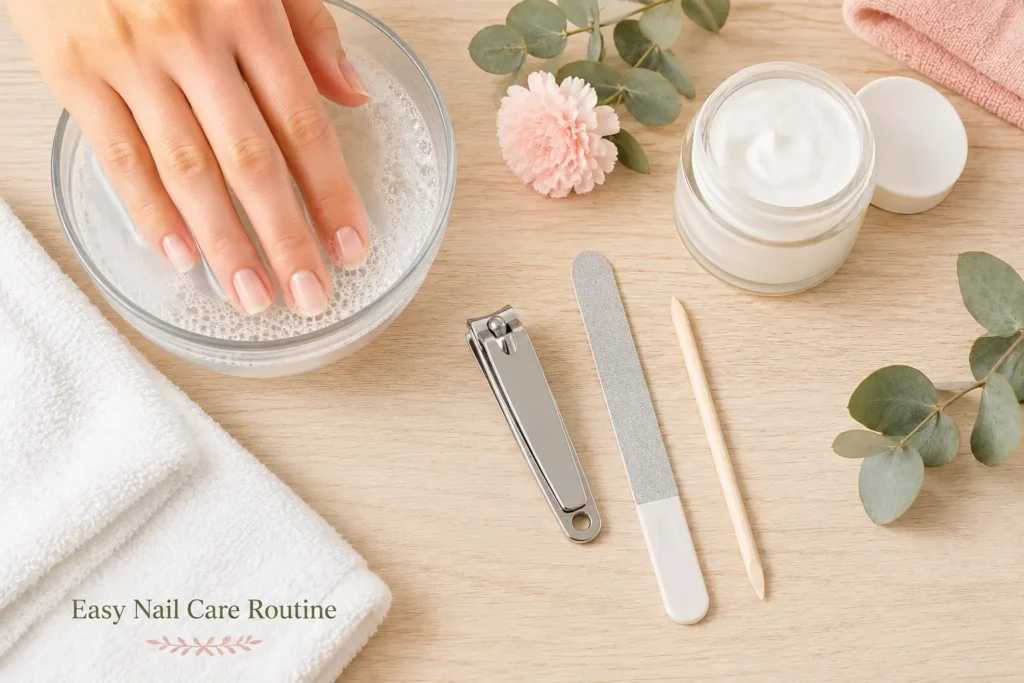
This is the part everyone actually wants, so here it is in full. Start by soaking your hands in warm water for about five minutes, which softens the keratin and makes every step that follows both easier and safer to do without causing damage. Next, trim your nails straight across rather than curving deeply into the corners, since cutting too far into the sides is one of the most common causes of ingrown nails that I see. After trimming, file to shape using a fine grit file, and always move the file in one direction rather than sawing back and forth, because that back and forth motion creates tiny fractures in the nail plate that show up as splitting weeks later. Once the shape is set, gently push the cuticle back using a wooden stick, and never cut healthy cuticle tissue, since you would be removing your own natural infection barrier for no real benefit. Immediately after shaping, apply a cuticle oil or a thick hand cream, because this locks in the moisture from your earlier soak instead of letting it evaporate into the air. If you’re adding polish, always start with a base coat, which protects the nail from staining and gives the polish a smoother surface to grip, and skipping this step is genuinely one of the most common mistakes I see people make. Finally, check your nails every few weeks for new ridges, discoloration, or texture changes, because catching a problem early is always easier to fix than catching it late.
Step Action Why It Matters
1 Soak in warm water Softens keratin for safe shaping
2 Trim straight across Prevents ingrown nails
3 File in one direction Avoids micro fractures
4 Push back cuticles gently Preserves the infection barrier
5 Apply oil or cream Locks in hydration
6 Apply a base coat Protects and smooths the nail
7 Monitor for changes Catches problems early
What Is the Best Nail Care Routine by Type?
Once you’ve placed yourself into one of the five nail types above, you can adjust the basic seven steps into something that actually treats the problem rather than just maintaining the surface.
Routine for Healthy Nails
Stick with the basic routine about twice a week, and add a light layer of cuticle oil daily on top of that. Resist the urge to add heavy treatments here, since overtreating already healthy nails can throw off their natural balance rather than improve it.
Routine for Ridged Nails
Buff very gently with a fine buffer block, but stop well before you feel like you’re sanding the ridges flat, since aggressive buffing thins the nail further and can make ridging worse over time. Follow buffing with a ridge filling base coat, which smooths the visual surface without you having to remove nail material to get there.
Routine for Soft Nails
Cut back on water exposure wherever you reasonably can, and wear gloves for dishes or cleaning tasks. Apply a nail hardener treatment two to three times a week, and always follow it with oil, since a hardener without oil afterward can swing soft nails into brittle territory instead of fixing the softness.
Routine for Brittle or Split Nails
This routine takes real patience, so set expectations early. Keep nails trimmed short while they heal, since extra length adds mechanical stress to an already weak plate. Apply a keratin based nail treatment nightly, and give it a genuine eight to twelve weeks before judging whether it’s working, because nail growth is slow and there is no shortcut around that timeline no matter what a product label claims.
How Can You Strengthen Nails Naturally?
Strengthening nails doesn’t always require a shopping cart full of specialty products, and some of the most reliable improvements I’ve seen in clients came from changes made inside the body rather than from anything applied on top of the nail.
Best Vitamins for Nail Growth
Biotin, zinc, and iron sit at the top of this list for good reason. Biotin supports keratin production directly, zinc plays a role in cell growth and repair, and iron deficiency is a genuinely underrated cause of soft or spoon shaped nails that often gets missed. That said, talk to a doctor before adding supplements, since more is not automatically better and excess biotin can even interfere with certain lab test results.
Home Remedies That Actually Work
Warmed olive oil or coconut oil, massaged gently into the cuticle, does a legitimately good job of restoring moisture, and it’s something I recommend often because it’s cheap, safe, and easy to keep up with daily. Diluted apple cider vinegar soaks come up a lot online as a pH balancing remedy, and while some people do report good results, I’ll be honest that the evidence here leans more anecdotal than clinical, so treat it as a low risk experiment rather than a guaranteed fix.
Foods That Support Nail Health
Eggs, salmon, nuts, and leafy greens show up on nearly every dermatologist’s recommendation list, and that’s because they’re loaded with biotin, omega-3 fatty acids, and protein, all of which the body uses directly to build keratin. I’ve had clients see real improvement within a couple of months simply by adding two or three of these foods into a weekly routine they were already following.
How Fast Do Nails Grow, and Can You Speed It Up?
Fingernails grow at roughly 3 millimeters a month on average, which means a nail damaged near the base today will take somewhere between three and six months to fully grow out and disappear. Toenails grow even more slowly, closer to 1 millimeter a month, which is part of why toenail injuries feel like they take forever to resolve. Age, poor circulation, and general health all slow this rate down over time. I always tell clients honestly that no product on the market dramatically speeds up nail growth despite what the packaging might imply, but removing the things actively slowing growth down, like chronic dehydration, poor nutrition, or repeated trauma from aggressive manicures, genuinely does help nails reach their natural growth potential faster.
What Is the Nail Matrix, and How Does It Work?
The nail matrix sits just beneath the cuticle, hidden under the skin where you can’t see it directly, and it is the part of the nail that actually matters most, because this is where new nail cells are produced in the first place. The nail bed, by comparison, is the skin underneath the visible nail plate, and its main job is supplying blood flow and nutrients as the nail travels forward toward the fingertip. Damage to the matrix is a far bigger concern than damage to the nail bed, since the matrix controls how new nail grows in going forward, and a hard hit near the base of the nail can sometimes cause permanent ridging or discoloration even long after the original injury has fully healed.
What Ingredients Should You Avoid in Nail Products?
Not every polish sitting on a store shelf is doing your nails any favors, and some are formulated with chemicals that either weaken the nail over time or raise broader health concerns worth knowing about.
The 9 Blacklisted Ingredients
Ingredient Common Concern
Dibutyl Phthalate (DBP) Linked to hormone disruption
Formaldehyde Nail hardening chemical, respiratory irritant
Toluene Can cause dizziness with heavy exposure
Formaldehyde Resin Common allergen in polish
Camphor Can trigger skin irritation
Triphenyl Phosphate (TPHP) Plasticizer, hormone concerns
Xylene Solvent, respiratory irritant
Parabens Preservative, hormone concerns
Animal Derived Ingredients Ethical and sourcing concern
Looking for polish labeled 9-free or non-toxic skips every ingredient on this table in one step, and it’s a small label check that pays off over months of regular use.
How to Read a Nail Polish Label
Ingredient lists on nail products are genuinely hard to parse at a glance, which is exactly why the shortcut of checking for a 9-free or clean claim on the front of the bottle saves so much time. That said, I still recommend flipping the bottle over occasionally, since marketing claims and actual ingredient lists don’t always line up perfectly, and a quick scan for the nine ingredients above only takes a few seconds once you know what to look for.
When Should You See a Dermatologist?
Most nail issues are cosmetic and manageable entirely at home, but a smaller number genuinely need a professional opinion, and it’s worth knowing where that line sits.
Warning Signs to Watch For
A sudden dark streak appearing under the nail, real pain around the nail bed, noticeable swelling, or a nail that starts pulling away from the surrounding skin all deserve a dermatologist’s attention rather than another home remedy. These are not symptoms worth waiting out on your own.
Conditions That Mimic Nail Damage
Psoriasis, fungal infections, and thyroid disorders can all produce nail changes that look almost identical to ordinary damage from manicures or dehydration, which is part of why home treatment sometimes fails no matter how consistent someone is with it. If a full nail care routine isn’t showing improvement after a couple of months, that’s usually the clearest sign the underlying issue isn’t cosmetic at all.
What Nail Care Mistakes Should You Avoid?
A handful of habits quietly undo even a solid routine, and I see the same three come up again and again. Peeling gel polish off by hand pulls layers of the actual nail plate away with it, so soaking it off with proper remover is always the safer route even though it takes longer. Cutting cuticles too aggressively removes your own natural infection barrier every single time, so pushing back rather than trimming should be the default habit. And skipping a base coat seems like a minor shortcut, but it plays a surprisingly large role in staining, peeling polish, and weakened nails building up over months of repeated exposure.
FAQs:
How often should you moisturize your nails?
Daily is ideal, and especially right after washing your hands, since that’s the exact moment moisture escapes the fastest from the nail plate and surrounding skin.
Is biotin actually effective for nails?
For someone with a genuine deficiency, yes, and the research does support that connection. For someone already getting enough biotin through food, extra supplementation usually doesn’t add much noticeable benefit.
Can weak nails be a sign of a health issue?
Sometimes, yes. Persistent brittleness, spoon shaped nails, or sudden ridging can point toward thyroid issues, anemia, or a nutritional gap, so it’s worth mentioning to a doctor if consistent home care isn’t producing any improvement after a reasonable stretch of time.
Key Takeaways
Good nail care isn’t complicated once you strip away the marketing noise, but it does need to match your specific nail type rather than following a generic routine off the back of a product box. Soften, trim, file, moisturize, and protect forms the foundation for absolutely everyone, and from there, ridged nails need gentle buffing with a filling base coat, soft nails need reduced water exposure paired with a hardening treatment, and brittle or split nails need patience above everything else, since real structural change takes months rather than days no matter how motivated you are. Pay attention to what you’re putting on your nails too, since steering clear of the nine ingredients listed above and limiting harsh acetone exposure will save real frustration down the line. And if something changes suddenly or doesn’t respond to consistent home care, don’t just reach for another remedy, get it checked by a professional. In my experience, nails are small, but they’re honestly one of the more reliable windows into what’s going on with the rest of the body.